

How Menopause Affects Your Skin: Causes, Signs, Solutions
Many women approaching or living through menopause find that their skin doesn’t react or behave the way it used to. Products that worked for years suddenly sting, crease lines deepen, and even blemishes make a surprising comeback. These changes are real, emotional, and often confusing, especially when you’ve taken good care of your skin for decades.
The good news? Understanding why these shifts happen and what science says helps you regain control and make smart, effective care decisions. In this blog, we’ll give you detailed insights about the causes, signs and possible solutions to prevent menopause snatching away the glow on your skin.
Wrinkles & Fine Lines
Menopause brings unexpected skin changes, including dryness, fine lines, and sagging. Visiting a Botox clinic in Toronto can help address these changes while maintaining a natural appearance. Hormonal shifts reduce collagen and elastin, making skin more fragile, while increased androgens trigger oil production, potentially causing adult acne:
- Hormonal imbalance can lead to inflammation and breakouts.
- Reduced estrogen decreases skin elasticity and hydration.
- Regular skincare may not fully prevent visible changes.
Botox treatments offer targeted solutions to soften wrinkles and rejuvenate aging skin naturally.
Signs to Watch For
- Fine lines around eyes and forehead become increasingly noticeable.
- Skin may feel drier, thinner, and more sensitive than usual.
- Occasional breakouts on jawline or chin despite clear past skin.
Solutions (Practical & Evidence‑Informed)
- Professional botox treatments smooth wrinkles without compromising natural expressions.
- Moisturizers with hyaluronic acid restore hydration and improve skin texture.
- Gentle exfoliation helps remove dead cells and unclog pores safely.
Decreased Collagen & Loss of Elasticity
Estrogen is critical for stimulating fibroblasts because these cells produce collagen and elastin, the proteins that keep skin plump, firm, and elastic. During menopause, estrogen levels fall sharply, which leads to:
- A decrease in collagen production
- Thinning of the dermal layer
- Loss of elasticity and resilience
A systematic review found that menopausal hormone therapy significantly increases skin elasticity, thickness, and collagen content, showing how closely tied estrogen and skin structure really are.
Signs to Watch For
- Sagging contours around cheeks, jawline, and neck
- “Crepey” texture on arms and under the eyes
- Loss of firmness that seems more pronounced than natural aging
These features often appear within the first five years of menopause, when collagen decline can accelerate dramatically.
Solutions (Practical & Evidence‑Informed)
- Use products that have compounds that promote the production of collagen such as peptides.
- Protect from UV rays, as it is known to accelerate collagen breakdown and contribute to loose skin.
- A gentle massage therapy on the face can work to stimulate circulation and the production of fibroblasts.
- Proper fluid intake and diet high in amino acids help provide the raw materials for collagen.
- Sun protection is an effective way to delay collagen breakdown.
Dryness & Thinning Skin
Estrogen’s role in hydrating the skin includes the encouragement of sebaceous gland secretion and the skin’s ability to retain moisture. As a result of declining estrogen:
- Sebaceous output declines
- Glycosaminoglycans drops
- Skin stops being able to hold water and retain it
All these changes cause drying, flaking, and a thinning of the skin.
Signs You’re Experiencing This
- Skin feels tight or ‘cracks’ easily
- Fine flakes or rough texture
- Increased visible lines due to dehydrated skin
A recent journal review underscored that menopause leads to reduced moisture and elasticity, contributing to dryness and increased wrinkle formation.
Solutions That Make a Noticeable Difference
- Choose rich moisturizers with ceramides and hyaluronic acid to support skin barrier function.
- Avoid long, hot showers that strip natural oils.
- Include gentle cleansers without harsh sulfates or fragrances.
- Layer hydrating serums under emollient creams to lock in moisture.
- Humidifiers can help offset dry indoor air, especially in winter.
Acne & Breakouts During Menopause
One of the most unexpected changes in the skin during menopause is acne or pimples, particularly in women who have not experienced acne in their teens.
As a result, lower levels of estrogen and relatively greater levels of androgen (male hormones such as testosterone) lead to the overstimulation of sebaceous glands to produce higher quantities of oil.
Then, because dead cells and excess oil combine in large quantities in the pores, blockage and inflammation occur. This process has now received scientific validation because lower levels of estrogen associated with menopause have been found to lead to acne conditions owing to inflammation.
Indicators of Menopausal Acne
- Breakouts were centered on the jawline area.
- Clogged pores that are “bumpy” to the touch.
- Acne present even with regular skin care and past episodes of clear skin
- Outbreaks during periods of stress or hormonal changes
Contrary to the acne that occurs in teenagers, menopausal acne tends to be more inflamed and tender. Additionally, the stresses of menopause (sleep disturbance and moods) may also trigger cortisol release and accelerate acne.
Solutions (Evidence‑Based & Practical)
- Use a mild, non‑stripping cleanser that eliminates excess oil without drying out the skin further. Over‑drying weakens the skin barrier and can paradoxically stimulate more oil production.
- Salicylic acid helps unclog pores and reduce oil build-up.
- Benzoyl peroxide may reduce acne‑causing bacteria.
These work without overly irritating menopausal skin when used in moderation.
Increased Sensitivity & Irritation
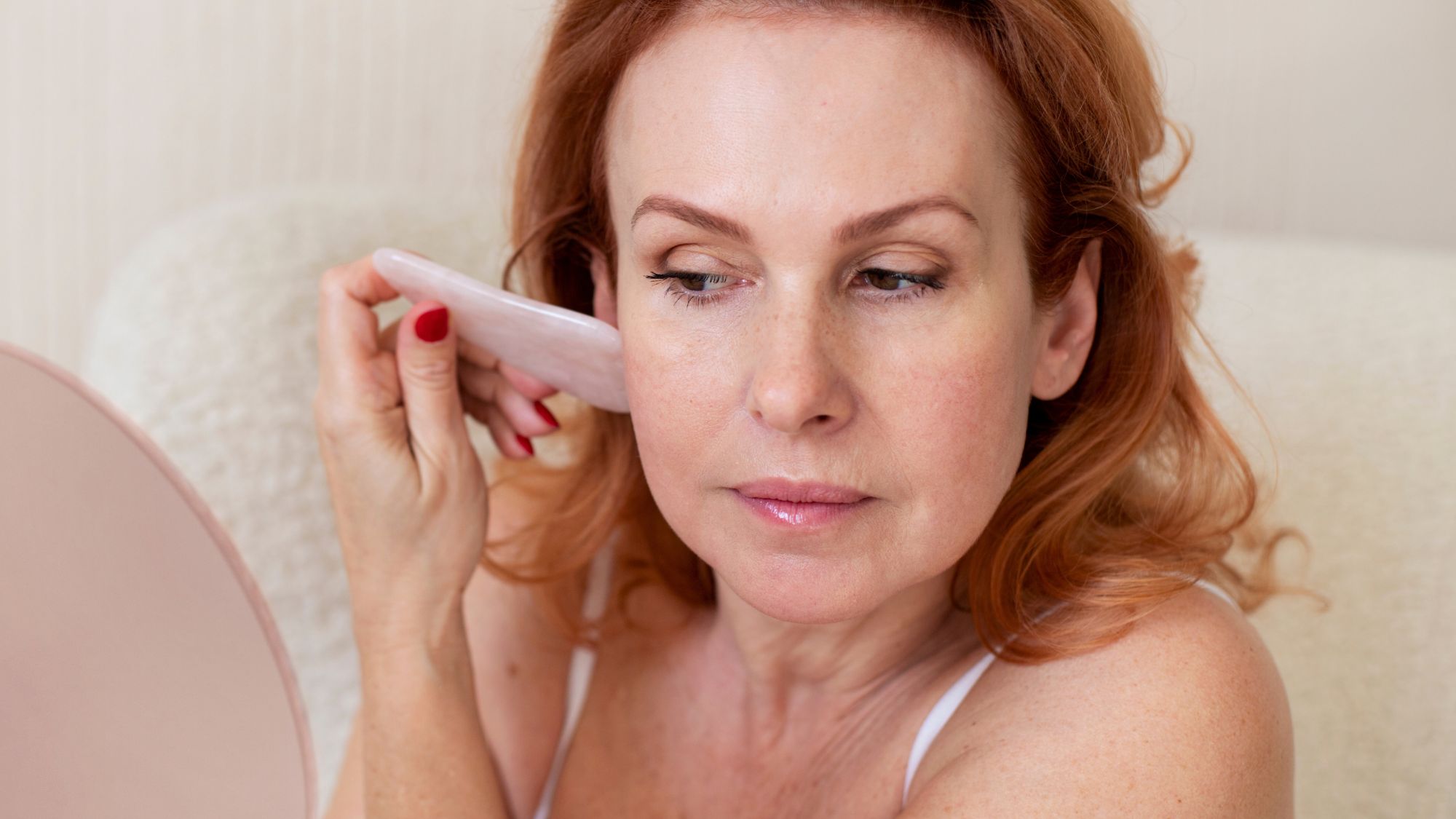
The drop in estrogen affects more than just moisture and collagen. It also alters the skin’s barrier function, which protects against irritation and environmental stressors. This weakened barrier makes skin more reactive, especially to products you may have used for years.
Signs It’s Sensitivity, Not Just Dryness
- Redness or stinging with formerly tolerated products
- Patchy inflammation or flakiness around cheeks, chin, or neck
- More frequent reactions to fragrance, acids, and exfoliants
Studies show that menopause can heighten these sensitivity reactions as the skin’s protective mechanisms falter.
Solutions for Comfort & Barrier Strength
- Switch to fragrance‑free, low‑pH cleansers.
- Avoid over‑exfoliating; gentle smoothing instead of aggressive chemical peels.
- Look for ceramides, cholesterol, and fatty acids in skincare for rebuilding the protective layer.
- Shorten routines to fewer, more effective steps.
- Internal stress and temperature changes can heighten reactivity. Stress management and protective clothing during sun/wind exposure help.
Conclusion
Menopause doesn’t mean your skin is “failing”. It means it is changing. The dryness, sensitivity, breakouts, pigmentation, and slower healing you may notice are actually biological responses to shifting hormones and a new internal balance. When you understand what is happening beneath the surface, skin changes feel less frightening and far more manageable.
With informed care, patience, and realistic expectations, your skin can remain healthy, comfortable, and resilient. This stage of life is not the end of good skin but the beginning of a different, more intentional way of caring for it.
